
Singular, Dual, and Plural Nouns in Arabic: A Complete Guide for Beginners
Arabic Grammar for Beginners: Mastering Singular, Dual, and Plural Nouns (Noun Numbers)
One of the biggest challenges in learning Arabic is realizing that "plural" doesn't just mean "more than one." Unlike English, Arabic uses a unique system of singular, dual, and plural nouns. Mastering these is the key to building a solid vocabulary and speaking with precision.

In this guide, we will break down the essentials of Arabic noun inflection based on number. Whether you are a total beginner or looking for a quick refresher, you’ll learn:
- The basic concepts of Mufrad (Singular), Muthanna (Dual), and Jam’ (Plural).
- Step-by-step rules on how to form these nouns correctly.
- A comprehensive Arabic vocabulary list with English translations to help your memorization process.
If you've already checked out my previous lessons on this lesson and this one, this is good. Let’s dive in and start expanding your vocabulary!
Understanding Arabic Noun Numbers
Before you start reading and memorizing the singular and plural vocabulary lists, it’s important to first understand the core concept of noun numbers in Arabic.
In English, we usually just deal with one or many. However, in Arabic, nouns change their form (or "inflect") based on three distinct numbers.
Understanding these three categories is your first step to mastering Arabic sentence structure:
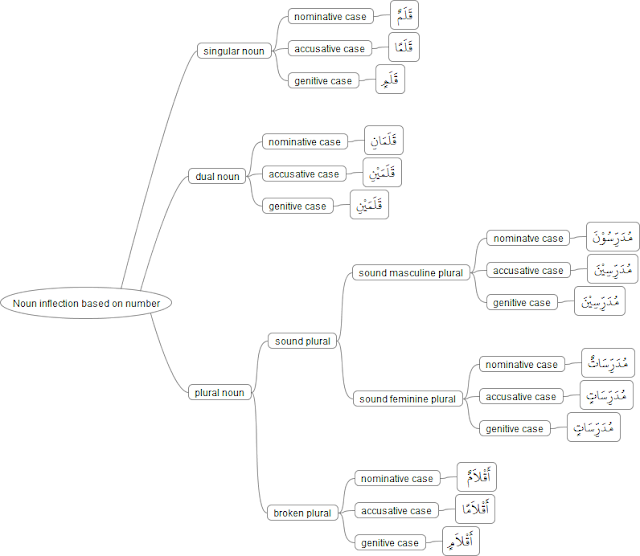
- Singular ⇒ مفرد (Mufrad) – Used for one person or thing.
- Dual ⇒ مثنّى (Muthanna) – Used specifically for exactly two.
- Plural ⇒ جمع (Jam'un) – Used for three or more.
To make this easy to digest, we’ll look at each one closely. Let's start with the simplest form: the Singular noun.
1. Singular Nouns (Mufrad - مفرد)
A Mufrad is a noun that refers to exactly one person or thing. It is the base form you will find in any dictionary.
Examples:
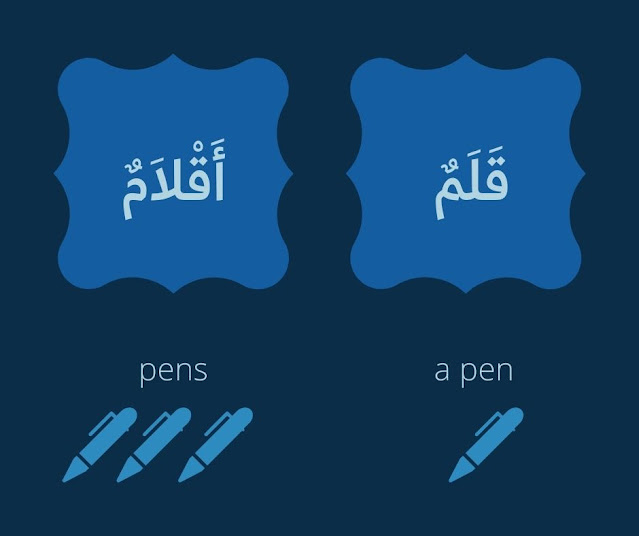
- قَلَمٌ (Qalamun) = A pen
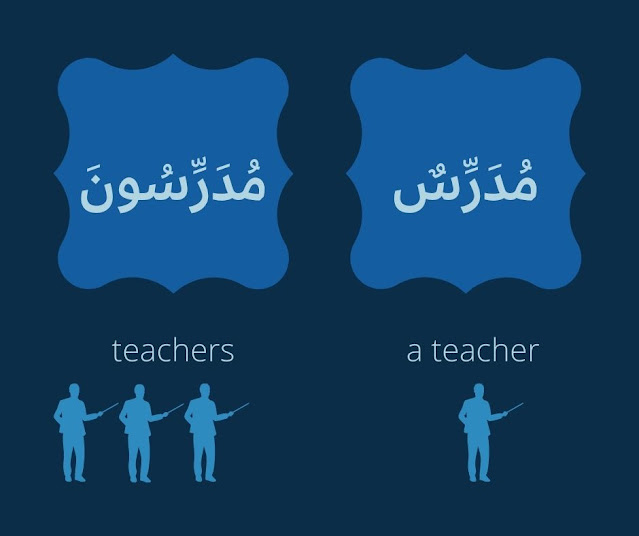
- مُدَرِّسٌ (Mudarrisun) = A teacher (male)
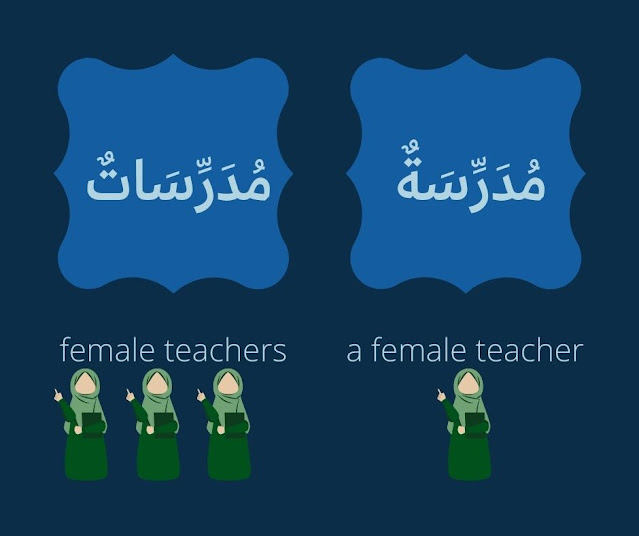
- مُدَرِّسَةٌ (Mudarrisatun) = A teacher (female)
2. Dual Nouns (Muthanna - مثنّى)
In Arabic, we have a specific form for exactly two of something. To change a singular noun into a dual noun, we simply add a suffix.
How to Form Dual Nouns in Arabic:
The suffix changes depending on the noun's role in the sentence (its "case"):
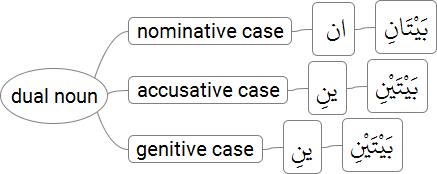
- Add انِ (-aani): For the Nominative case (usually the subject of the sentence).
- Example: مُدَرِّسٌ → مُدَرِّسَانِ (Two teachers)
- Add يْنِ (-ayni): For Accusative/Genitive cases (when the noun is an object or follows a preposition).
- Example: مُدَرِّسٌ → مُدَرِّسَيْنِ (Two teachers)
💡 Pro-Tip for Feminine Nouns:
If the word ends in a Ta Marbutah (ة), change it to a regular "T" (ت) before adding the dual suffixes.
- Example: مُدَرِّسَةٌ → مُدَرِّسَتَانِ
3. Plural Nouns (Jam’ - جمع)
A Jam’ refers to three or more. In Arabic, plurals are divided into two main types: Sound (Regular) and Broken (Irregular).
Type A: Sound Plurals (الجمع السّالم)
Think of these as "Regular" plurals. The original singular word stays intact, and we just attach an ending.
- Sound Masculine Plural (Jam' Mudhakkar Salim):
- Add ونَ (-uuna) for Nominative.
- Add ينَ (-iina) for Accusative/Genitive.
- Example: مُجْتَهِدٌ (Hardworking) → مُجْتَهِدُونَ
- Sound Feminine Plural (Jam' Mu-annath Salim):
- Add اتٌ (-aatun) for Nominative.
- Add اتٍ (-aatin) for Accusative/Genitive.
- Example: مُدَرِّسَةٌ → مُدَرِّسَاتٌ
Type B: Broken Plurals (الجمع التكسير)
These are "Irregular" plurals. Unlike sound plurals, the internal structure of the singular word actually "breaks" or changes—much like how "Man" becomes "Men" in English.
- Broken Plural Example (Jam' Taksir): قَلَمٌ (Pen) → أَقْلاَمٌ (Pens)
- Note: These follow specific patterns (Wazan), which we have covered in more detail here.
Summary Table: Noun Suffixes at a Glance
| Number | Case | Masculine Suffix | Feminine Suffix |
|---|---|---|---|
| Dual | Nominative | انِ (-aani) | تَانِ (-taani) |
| Acc/Gen | يْنِ (-ayni) | تَيْنِ (-tayni) | |
| Sound Plural | Nominative | ونَ (-uuna) | اتٌ (-aatun) |
| Acc/Gen | ينَ (-iina) | اتٍ (-aatin) |
Ready to put this into practice?
Now that you understand the rules, let's dive into the Essential Arabic Vocabulary List below to help you memorize these forms through real-world examples!
Arabic Vocabulary List: Singular and Plural Nouns
Note: The singular form is written first, followed by the plural form. (Singular ⇒ Plural)
Profession (المهنة)
- تَاجِرٌ (a merchant) ⇒ تُجَّارٌ
- طَيَّارٌ (a pilot) ⇒ طَيَّارُونَ
- خَيَّاطٌ (a tailor) ⇒ خَيَّاطُونَ
- نَجَّارٌ (a carpenter) ⇒ نَجَّارُونَ
- طَبِيْبٌ (a doctor) ⇒ أَطِبَّاءُ
Family (الأسرة)
- أَبٌ (a father) ⇒ آباءٌ
- أُمٌّ (a mother) ⇒ أُمَّهَاتٌ
- جَدٌّ (a grandfather) ⇒ أَجْدَادٌ
- جَدَّةٌ (a grandmother) ⇒ جَدَّاتٌ
- أَخٌ (a brother) ⇒ إِخْوَانٌ
- أُخْتٌ (a sister) ⇒ أَخَوَاتٌ
Furniture (الأثاث)
- أَرِيْكَةٌ (a sofa) ⇒ أَرَائِكٌ
- طَاوِلَةٌ (a table) ⇒ طَاوِلَاتٌ
- سَرِيْرٌ (a bed) ⇒ أَسِرَّةٌ
- خِزَانَةٌ (a cupboard) ⇒ خَزَائِنُ
- مِصْبَاحٌ (a lamp) ⇒ مَصَابِيحُ
Transportation (المواصلات)
- سَيَّارَةٌ (a car) ⇒ سَيَّارَاتٌ
- حَافِلَةٌ (a bus) ⇒ حَافِلَاتٌ
- دَرَّاجَةٌ (a bicycle) ⇒ دَرَّاجَاتٌ
- طَائِرَةٌ (a plane) ⇒ طَائِرَاتٌ
- قِطَارٌ (a train) ⇒ قِطَارَاتٌ
Clothes (الملابس)
- لِبَاسٌ (apparel) ⇒ أَلْبِسَةٌ
- قَمِيْصٌ (a shirt) ⇒ قُمْصَانٌ
- سِرْوَالٌ (pants) ⇒ سَرَاوِيلُ
- بَنْطَلُونٌ (trousers) ⇒ بَنْطَلُونَاتٌ
- جَوْرَبٌ (socks) ⇒ جَوَارِبُ
Animals (الحيوانات)
- دِيْكٌ (a rooster) ⇒ دُيُوكٌ
- بَطَّةٌ (a duck) ⇒ بِطَطٌ
- غَنَمٌ (a goat) ⇒ أَغْنَامٌ
- حِصَانٌ (a horse) ⇒ حُصُنٌ
- قِرْدٌ (a monkey) ⇒ قِرَدَةٌ
Video Lessons: Singular and Plural Nouns in Arabic
Adjectives in Singular and Plural Form
Examples of Singular, Dual, and Plural Nouns
Wrap Up & Next Steps
Congratulations! You’ve just mastered the foundational rules of Arabic singular, dual, and plural nouns. While these rules might seem complex at first, consistent practice is what turns this knowledge into a natural skill.
To help you bridge the gap between "learning" and "remembering," I highly recommend our featured e-book: Singular and Plural Nouns in Arabic: The Ultimate Practice Guide.
Why choose this e-book?
This isn't just a list of words. It’s an interactive workbook designed to make your memorization process effortless and fun. Inside, you’ll find:
- Engaging Exercises: From matching games to fill-in-the-blanks that reinforce your learning.
- Clear Reference Lists: Fast-track your progress by having all essential singular and plural forms in one place.
- Proven Results: Build the confidence to use these nouns correctly in real-life Arabic conversations.
Don’t let these rules slip away—start practicing today and take your Arabic vocabulary to the next level!
No comments:
Post a Comment